Showing posts with label Italy. Show all posts

Sunday, 16 September 2012

Italian villages

Small towns with fascinating colors and unforgettable flavors...

Italy has a new recipe to climb the ranks of the World Tourism Organization. The new recipe is "The Most Beautiful Villages of Italy". Just over 200 are those surveyed by this special 'club' sponsored by italian Anci. This mini-travel guide is dedicated to these areas as small as rich of typical food, breathtaking landscapes, medieval towns with castles and towers.

Welcome to the South

A Torre Normanna in an Italian small villageAmong the "most beautiful villages in Italy" there are also Castellabate, the town in the province of Salerno, Campania, where it was shot the famous film "Welcome to the South" ("Benvenuti al Sud"), and Nusco, the village of the famous former Italian premier Ciriaco De Mita. Those who love good drinks, such as grappa and prosecco will love Portofubbolé, a small village in the province of Treviso, which Italian Wikipedia page describes as "a real gem in historical and artistic terms."
The northernmost Italian village is Vipiteno, Trentino Alto Adige, a region that has a total of seven villages of excellence. The southernmost is Castelmola, Sicily, the village well known for its almond wine.

Italian villages in Umbria and Abruzzo, "uber alles"!

The highest concentration of "mignon" villages with extreme beauty is prerogative of the central Italy, between Tuscany (18), Marche (19), Umbria (22), Lazio (11), Abruzzo (21) and Molise (2) are 93 smalls villages on which stands the amaranth flag, eco-tourism and environmental Anci award established in 2001. If you want to organize a trip to Italian villages, this area is where you have to go.

Around Italian villages with the caravan or cycling

Cefalu, a wonderful Italian small villageThe best 'formula' to visit many of the small towns across Italy with fascinating colors and unforgettable flavors, is precisely this way of itinerant tourism: on board a camper or with a caravan, it is easier to go through the Country village by village, becoming explorers of the wonders "the Peninsula" can offer even far from the big cities and the most famous places of the Adriatic and Tyrrhenian coasts. If along with the 'mobile home', there is also a bicycle, then the exploration can become even more interesting: the most beautiful towns in the world offer endless possibilities for lovers of two wheels to make tours in small town centers, in the countryside around them or on the waterfronts that draw the skyline. The line of the sky, in these small italian villages is often characterized by towers, castles, ancient and imposing fortifications that perpetuate extraordinary beauty and timeless.

Italian villages: for more information, read...

- Travel PUGLIA;
- Travel MATERA;
- Travel CAPRI.

How to book and save

- Hotels in Italy - Good selection of Hotels in Italy from Booking.com website.

In general, it is always good to book online, where there is more competition, you can compare the offers and choose the best calmly. The guides present on my blog on flights online booking, hotels, and car rental with discount codes are certainly useful and recommended readings.

Saturday, 13 August 2011

Holidays in Puglia

Hi, and welcome to Puglia, I've been in this region of Italy several times and here I am ready to help.

I am pleased you have chosen this lovely region for an holiday in Italy, and want to help you where possible. First of all, in case every need of information don't hesitate to leave a comment and I'll promptly provide a response if you are lost in translation, need help to communicate with locals, need information on directions, or for any other sort of indication.
Click here for a selection of Hotels in Puglia.

In Puglia I suggest you a visit to Ostuni.
Here you have some inspiring pictures of Ostuni.
When in Ostuni, go straight to Piazza della Libertà, where there is the Guglia di Sant'Oronzo. Do not miss, also the old Barocco style of the church of S. Maria Maddalena, with the facade from 1700, and finally the Palazzo Ducale. Beautiful viewpoints everywhere, in Ostuni.
A restaurant in Ostuni I loved was the Osteria la Sparacima, in Via Arcidiacono Zaccaria.
Here you can find the direct link to the list of Hotels in Ostuni.

Polignano a Mare, Puglia, Italy.Polignano a Mare is another very nice small old city to visit.
Few pictures of Polignano a Mare can be found here.
And here a quick link to Hotels in Polignano a Mare.

Alberobello, is the town famous around the world for white houses with cone roofs, the Trulli. Arrived in town, look for the Rione Monti (Monti district), it's the oldest of Alberobello. It's a unique place. It's very interesting to see also the Trullo Sovrano (Sovereign Trullo), one of the few with two floors, now it's a small museum that tells the story of the Trulli.
Here you can find a selection of Hotels in Alberobello.

Castellana Grotte, Puglia, ItalyIf you're in the area, I highly recommend you do not miss a visit to the Grotte di Castellana (Caves of Castellana), culminating in the fantastic subterranean Grotta Bianca (White Grotto), the most admired for its white limestone sculpture.
There are several good Hotels in Castellana Grotte.

Any information you need on Puglia, please don't hesitate to let me know, leave a comment and I'll sort it for you!

Enjoy your holidays in Puglia.

Sunday, 9 May 2010

A weekend in Turin

Eat in Turin, Vineria Tre GalliEat in Turin, Vineria Tre Galli
Tre Galli, in the buzzing Quadrilatero Romano district, proves you can eat well in Turin without breaking the bank. Rib-eye steaks and steaming mussels are washed down with wines from Venice and Valle d’Aosta.
25 Via Sant’Agostino, +39 011 521 6027

Eat in Turin, Baratti & Milano
This Torinese institution is worth visiting as much for its sumptuous décor as its assortment of cakes, chocolates and Piedmontese specialities. It’s the perfect place for sweet tooths and gourmands to linger for an hour or two.
27 Piazza Castello, +39 011 440 7138

Stay in Turin, Le Meridien Turin Art+TechStay in Turin, Le Meridien Turin Art+Tech
The light filled rooms at this ultra modern five-star have been furnished by top designers, while the building itself, a former Fiat factory, also houses a concert hall, art gallery, conference centre and shopping mall.
230 Via Nizza

Stay in Turin, Golden Palace Hotel
Opened in 2006 for the Winter Olympics, this five-star hotel combines luxury with high-tech design. Bedrooms feature LCD TVs and electronic curtains, while marble bathrooms are stocked with products by Turinese perfumer Laura Tonatto.
18 Via dell’Arcivescovado

Stay in Turin, Town House 70
Located in the heart of Turin near the lively Via Roma, this boutique hotel offer a touch of urban sophistication. The 20 rooms, 26 junior suites and one suite come equipped with LCD TVs, spacious bathrooms, and stylish, modern furniture.
70 Via XX Settembre

See in Turin, Valentino ParkSee in Turin, Valentino Park
Home to Turin’s botanical gardens, this green oasis also has beautiful fountains, a French-style, 18th-century castle and a bizarre recreation of a medieval village.
Corso Massimo d’Azeglio

See in Turin, Porta Palatina
Dating back to the first century AD, these two magnificent red towers and archways near the cathedral were the gates to the city in Roman times. Nearby, you’ll find remains of a Roman theatre, part of which lies buried under the Royal Palace.
Piazza Cesare Augusto

See in Turin, Teatro Regio Torino
Rebuilt on the site of the original 18th-century theatre – destroyed by fire in the 1930s – the Teatro Regio combines striking modern architecture with surviving layers of the past. Superb acoustics make this an ideal venue for operas and ballets like La Traviata and The Nutcracker.

See near Turin, Asti
Explore nearby Asti, a town famous for its eponymous sparkling wine. Drop in at one of the many vineyards for a tasting or stop off at the 13th-century cathedral. Bareback horse race, the Palio d’Asti, thunders into town on 20 September.

See in Turin, Torino+Piemonte Card
The Torino+ Piemonte Card is a way to discover the city and the entire region, practically and economically. Available for 2, 3, 5 or 7 days (priced from 20 to 35 euro), it entitles you to free entry to over 170 cultural sites, including museums, exhibitions, monuments, castles, fortresses and Royal Residences in Turin and Piedmont; free use of all public ground transport and tourist transport in Turin (panoramic escalator to the Antonellian Mole and Sassi-Superga rack-railway) plus the GTT shuttle to Venaria Castle, Rivoli Castle and Pralormo, and the Turin-Ceres railway including the Caselle Airport stop, as well as a 10% discount on the City Sightseeing Torino ticket, valid for 48 hrs instead of 24.

See in Turin, City Sightseeing Torino
Turin can be discovered aboard the City Sightseeing Torino, a double-decker tourist bus with a view “from above”. The complete tour lasts approximately 1 hour and features a multi-language digital audio system. Price: 15 euro per person.

Shopping in Turin, Pastificio DefilippisShopping in Turin, Pastificio Defilippis
Feast your eyes on the past being folded and flipped at Defilippis, a foodie emporium established in 1872. Offering all sorts of shapes and squiggles, and varieties such as egg and Tricolore, it’s the perfect place to pick up some gifts for home or a simple dinner for later.
39 Via Lagrange, +39 011 542 137

Wednesday, 14 April 2010

A weekend in Tuscany, my tips

For your weekend, or a short break, in Tuscany, is perfect to land in Pisa, and rent a car with Avis: they have there a fleet of fantastic Fiat 500, there’s nothing better than that for a weekend in Tuscany. You’ll need with you a GPS with Italian maps, for sure.

If you decide to sleep one night in Pisa, this hotel is modern and great: NH Hotel Cavalieri Pisa. Well placed in the city center, with a very good breakfast buffet. Checked by myself.
To see in Pisa, the Miracles Place with the famous Tower, the river in the city center, and a walk in the Old town, not far from Piazza dei Miracoli.
Eat in Pisa: not near Piazza dei Miracoli, go in Borgo Stretto, Piazza Dante Alighieri, Via San Martino and choose one you like.

Lucca, TuscanyAnother place to visit is Lucca. The old town is inside the big walls, where you go, is always great, small and very oldy with nice places. Lovely!
Where to sleep in Lucca? I slept in a big hotel near the Train Station, close to the old town outside the wall, there is a useful parking outside. Unfortunately I don’t remember the name, but in the city the choice of accommodation is adeguate: Hotels in Lucca.
Eat in Lucca, go straight here: Cantine Bernardini, Palazzo Bernardini, Via del Suffragio 7.

A place where you should go, definitely, is SAN GIMIGNANO.
Sleep here in the Tuscany countryside: Hotel Vecchio Asilo Via delle Torri, 4 Ulignano, 53030 San Gimignano.
Eat here in San Gimignano: Trattoria Chiribiri Piazza della Madonna 1.

I loved a lot PISTOIA. Slept in Hotel Villa Chiappugi, they have a good restaurant as well.

SIENA as well is unforgettable. I'll soon dedicate a post to this lovely place with all the info I have.

You like the seaside? Drive to VIAREGGIO, and the VERSILIA area.

If you want to have an idea looking pictures, in this page there are some pics about the cities I mentioned: Tuscany pictures.

Buon viaggio in Toscana!!

Sunday, 24 January 2010

Matera, Italy

Matera is located in the southestern corner of Italy, people live in the same exact homes that their ancestors did 9,000 years ago. Matera was created from a rocky ravine and the many natural caves in the area – called the 'Sassi di Matera’ - were the first houses of the Neolithic inhabitants of the region. The caves create a labyrinth of houses, and it’s practically impossible to distinguish the natural rock formations from the ancient architecture. The houses seem to sprout from the rock in an organic way, creating somewhat of a tourist attraction from what was in the mid 20th century a ghost town. Matera was notably the setting for Mel Gibson’s film 'The Passion of the Christ’.

Apart from an economy which has traditionally been based on agriculture, in the late 1990s the major economic base of Matera, and of surrounding cities, is the production of upholstered furniture.

Matera is the only place in the world where people can boast to be still living in the same houses of their ancestors of 9,000 years ago.

To arrange your accommodation in Matera, check Booking.com for latest info on Hotels in Matera.

The ancient rock City of Matera, Italy...
Matera, Italy

Tuesday, 12 January 2010

San Gimignano, Italy

From 2010 New Year's Day, 3 days in Tuscany holiday, is unforgettable and really enjoyful trip in my life.

Four-season in Tuscany, are all attractive. Beautiful view even in the winter, maybe much more mysterious: a charming scenery, a green rurality, a fresh temporature, a bright sunny sky, amazing discovery...

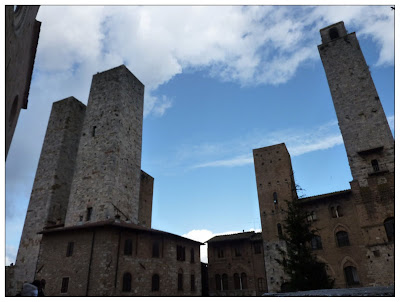
San Gimignano, ItalySan Gimignano in Tuscany, is one of the surprise on our trip. It rises on a hill (334m high) dominating the Elsa Valley with its towers. Once the seat of a small Etruscan village of the Hellenistic period (200-300 BC) it began its life as a town in the 10th century taking its name from the Holy Bishop of Modena, St. Gimignano, who is said to have saved the village from the barbarian hordes. The town increased in wealth and developed greatly during the Middle Ages thanks to the "Via Francigena" the trading and pilgrim's route that crossed it.


It's called ''City of Towers''
San Gimignano, Italy
San Gimignano is an important town in the Middle Ages due to its position on a trade and pilgrimage route, it was full of tall towers built by competitive and quarrelsome Tuscan families. Warring, the Black Death and the aggression of nearby Florence put a halt to the town's progress, and it remained a memorial to its 11th-13th century prosperity. There were once an incredible 72 towers rising above the town's rooftops. There are fewer towers nowadays, but the fourteen remaining are still impressive in the misty distance.

San Gimignano, ItalyIn the Museo Civico/Pinacoteca you can see various paintings depicting the town in the days when it bristled with warlike skyscrapers. One depiction shows a miniature town in the lap of St. Gimignano himself, who - to judge by the illustrations of his life - seems to have been a very busy patron saint.

Hotels in San Gimignano, click and find great deals, good availability and best rates. You would must have a fantastic holiday in San Gimignano.

Tuesday, 15 December 2009

Visiting in Turin, Piemonte

Turin, an important city of technology and industry in Italy (in Italian: Torino), is the capital of Piemonte region, located in the northwestern of Italy; is the one near French border.
Mole Antonelliana (Picture 1), is Turin's landmark building, was completed in 1888 as a synagogue. The 167.5-meter tower is the highest work of masonry in Europe and it now contain one of the finest cinema museum of Europe.

The National Cinema MuseumThe National Cinema Museum
The museum opened in July 2000, in the building that has come to symbolize Turin. In a spectacular setting the museum offers artifacts from the collection of the Maria Adrianna Prolo Foundation including magic lanterns, optical illusions, photographs, drawings, models and other curious items. Amongst a fascinating array of other movie memorabilia, be sure to check out the original cape worn by Christopher Reeve in Superman. If you're a certain age, that's incredibly exciting!

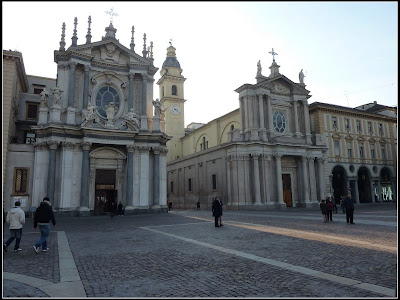
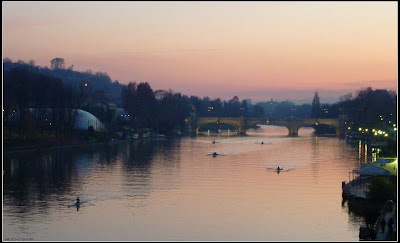
Picture 2: Turin - The house of the King Turin - The house of the King Picture 3: Turin - City Central Square (Piazza) Turin - City Central Square (Piazza)Picture 4: Turin - Building & Street Turin - Building & Street Picture 5: Turin - ChurchesTurin - Churches Picture 6: Turin (night view) - The Po River, flowing through the city
Turin (night view) - The Po River, flowing through the city Picture 7: Turin - Sunset colors
Turin - Sunset colors Picture 8: Turin - Central Railway Station
Turin - Central Railway StationPicture 9: Turin Stadium - Football (Juventus) Turin Stadium - Football (Juventus)Picture 10: Turin - FIAT Automobile
Turin - FIAT Automobile

Book here an Hotel in Turin (Torino) with great rates, you can refer to this booking online service.

Friday, 21 August 2009

Tuscany, a dream holiday

As everyone knows, Tuscany (Toscana) is one of the most beautiful and popular tourist destinations in Italy. It is located in central Italy, along the Mediterranean coast. Tuscany is a gently hilly region, well-known for its vineyards and olive groves, with large houses or small settlements scattered around the low hills. Its rich rolling landscape is complemented by towns overflowing with Renaissance art and architecture. The most important river is the Arno, on which Florence and Pisa are situated, although the Tiber also passes briefly through Tuscany.

TuscanyTuscany is one of Italy's best wine-producing areas, with Chianti and Montepulciano among its famous products.

Tuscany is divided into ten provinces: Arezzo, Firenze (Florence), Grosseto, Livorno, Lucca, Massa Carrara, Pisa, Pistoia, Prato and Siena.


Tuscany tourist destinations Tuscany
Florence is Tuscany's unmissable crown jewel, with its beautiful buildings, colourful history, priceless art and unique atmosphere. But Tuscany is one of the few Italian regions well-known to foreigners as a tourist destination in itself. For decades a Tuscan villa has been the dream holiday for many travellers. And amongst the vineyards and hills of Tuscany are other lovely historic towns - not as packed with attractions as Florence, but not as packed with tourists either.

Siena is a patrician hilltop town with a past to rival that of Florence, famous for the rivalry between its districts (called contrade) which climaxes in the Palio.

TuscanyPisa boasts not just the legendary leaning tower, but also several other attractions, and good transport links to other parts of Italy. Smaller Tuscan destinations which are popular with holidaymakers include Lucca, San Gimignano (a forest of medieval towers on a hill) and the wine-producing Chianti area.
Where to stay: booking hotels in Tuscany online, is easier to find a suitable accommodation for your dream holiday.

Thursday, 30 July 2009

Classic Itinerary in Umbria, Italy

UmbriaUmbria is a region of Central Italy, is a great place for a touring holiday, with picturesque hill towns, art of the highest quality, Roman and Etruscan history and some of Italy's most stunning scenery.

Here are LoveTravel's suggestions on how to get the most out of the region, whether you're attracted by the culture, the countryside or the cusine.

Perugia is the main city of Umbria: the lively evening passeggiata in the main piazza of Umbria's vibrant capital (a university city), is not to be missed. The key buildings are the pink-and-white cathedral, begun in 1345 but not finished until 1490, the 14th-century Palazzo dei Priori, which now houses the National Gallery of Umbria, and the extraordinary Fontana Maggiore, a marble fountain with carvings by Nicola and Giovanni Pisano.
Stay at: Le Silve, a retreat in the wooded valleys east of Assisi, with high-quality apartments from 100 EUR a night.

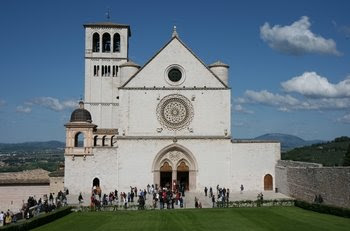
Assisi, the huge buttresses of the hilltop Basilica di San Francesco look forbidding as you approach, but they belie the extraordinary aubtlety of Giotto's frescos of the life of St Francis on the walls inside. Arrive early to miss the coach tours, and allow a full day here: the rest of the medieval town is less crowded than the basilica and well worth exploring.

Umbria

Orvieto is likely to be the high point of your trip. Its 14th-century cathedral has a gilded-mosaic facade that glows spectacularly in the sunset. Look out for the Palazzo del Capitano del Popolo, the bell tower in piazza della Repubblica and the Pozzo di San Patrizio, a 16th-century well with a double-spiral staircase. The local wine is excellent too.
Stay at: Hotel Duomo, 15 stone-steps away from the majestic Gothic cathedral of the city.

In Spello the original Roman gates survive, but it is the steep, winding streets of this medieval town that give it so much character. Don't miss the Pintoricchio frescos in Santa Maria Maggiore.

Spoleto, has an extraordinary mix of Roman remains incorporated into much later buildings; the little church of Sant'Eufemia is one of the best examples of this. Make sure to see Lippi's frescos in the cathedral, and the vertiginous Ponte delle Torri, a bridge that spans a steep gorge on the edge of the town.
Stay at: Cavaliere Palace Hotel, in the 17th century Accoramboni della Valnerina Palace, adorned with splendid frescoes.


Todi's main square, Piazza del Popolo, is perhaps the prettiest in Umbria. Lined with medieval and Renaissance palazzi, it slopes gently upwards to the facade of the 12th-century cathedral. But you get the greatest sense of the town's long history from its three sets of tconcentric walls: they were built by Etruscan, Roman and finally medieval engineers.

Planning your trip
The most convenient way of getting to Umbria is to fly from Stansted to Perugia. Alternatively, fly to Rome from Heathrow or Gatwick and drive up the A1. There are also some good-value local car hire.


Click here for hotel booking in Umbria.

Tuesday, 21 July 2009

August in Capri, Italy

Isle of Capri is most attractive and fantastic Summer Resort in Italy, It has been one of the most famous tourist place in the world, a luxurious and excellent Island.

Capri What to See
1) Arco Naturale and Pizzolungo, this bold Arch is what remains of a large grotto that penetraded the mountain. The waves of the sea extended its aperture and wasched away its debris.

2) Villa Jovis - Mount Tiberio, the most important of the island's twelve imperial villas, Villa Jovis was built in the First Century AD and discovered in the 18th Century under the rule of Charles of Bourbon.

3) Augustus Gardens - Via Krupp, the Gardens of Augustus are only few minutes walk from the Piazzetta, near the Via Krupp, the road which was the idear of A.F. Krupp, the German steel Industrialist, who - for this ene - purchased the "Fondo Certosa" (Certosa Estate), on the part of which rise the Gardens.

Capri
4) The Charterhouse of St. Giacomo. Count Giacomo Arcucci of Capri, Secretary to Jeanne I of Anjou, found just such a spot enclosed by walls in a small south-facing coastal valley called SAMA or LAMA, located some distance from the town. The Charterhouse's foundations date back to 1371 and it is believed that it was built on the remains of previous Roman buildings and the sixth villa of Tiberius.

5) Tour of the Island. Whether you choose to join an organised tour, or rent a private boat with captain, taking to turquoise waters is the only way to explore some of the most beautiful parts of the island. In fact, many of the most enchanting stretches of the Capri coastline are completely inaccessible by land. By boat visitors are able to reach those secluded bays which are just perfect for swimming or sun bathing - far from the crowds crammed onto the tiny pebble beaches.

6) La Grotta Azzurra, a magic no word or image could ever describe. It is a 60-metre-long, 25-metre-wide cavity; to get into it, yu need to take one of the small rowing boats moored outside the cave; since the opening is very narrow, you will have to lie on tCaprihe bottom of the boat to get into the grotto (in case the sea gros rough, boat service is suspended). There is acturally a bigger but completely submerged opening; this very underwater entrance allows the blue coloration of the water inside the grotto, due to a phenomenon of sunlight reflection. There is an almost surreal view in the inside, the transparency and the blue colour of the water give us the impression of navigating through a clear sky, and the boats seem to float on a fantastic universe.

The blue Grotto has been known since the Roman times, and Emperor Tiberius chose it as his own personal nymphaeum (Roman monumental fountain, translator's note), later on almost nothing was known of the grotto, also because the fishermen of the island believed it to be haunted by evil spirits. It was rediscovered and made popular as late as April 18th 1826 by the German painter August Kopisch and his friend Ernst Fries with the help of Angelo Ferraro, a fisherman; since then, the grotto has been visited by millions of tourists from anywhere in the world.

7) Mount Solaro - Cetrella - Chairlife, it is the highest place on the island (589 metres above sea level). You can eigher walk there (by taking the narrow street at the beginning of Viale Axel Munthe) or take the chairlife.
- 12 minutes by chairlife from Piazza Vittoria: about 1 hr on foot.

8) Villa San Michele - Axel Munthe, is located on the north-eastern side of Anacapri, 327 metres above sea level, Here was an ancient Roman imperial villa, whose ruins were preserved by Axel Munthe and are now to be found in the garden. In the area there were the remains of a medieval chapel later moved to its present position by Munthe himself.

9) La Migliera. You will certainly not miss one of the most beautiful walks in Capri. The route dateds back to the Roman times and was built to link Capodimonte (the only access to Anacapri until the last century) to the Migliera belvedere where the remains of Imperial-age buildings were found.

10) Towers and Forts. It is a long itinerary with some inaccessible stretches but its extraordinary beauty is worth the effort. The blockhouses and the set of paths and streets are located along the western coast of the island, between the Blue Grotto and the Punta Carena Lighthouse.

11) Punta Carena and Faro (Lighthouse). It is named after the westernmost point of the Island, is the second most important and powerful lighthouse in Italy, standing on the rocky promontory named Punta Carena (Carena = keel) because it looks like the keel of a ship.

Capri12) Villa Damecuta. Excavations at Villa Damecuta began in 1937 under the direction of Amedeo Maiuri. Amongst the findings salvaged from recent excavations, are fragments of columns made from pure Greek marble. These point to the villa's rich decor of marble floors, stucco work, decorations and works of art. The panoramic loggia of the villa si still preserved and reflects a structure similar to that of the imperial loggia at Villa Jovis.

Getting here
You can reach Capri by ferry or hydrofoil from either Naples or Sorrent. Trasportation from Naples is available either at the port of Calata Porta di Massa (only ferries) Molo Beverello and Mergellina (both only hydrofoils); however, it is much more convenient to depart from Molo Beverello because of the greater frequency of departures and larger selection of hydrofoils. The port of Calata Porta di Massa is connected with the nearby Molo Beverello with a shuttle service.
From Naples, the ferry takes about 80 minutes and costs about 9,00 EUR, while the hydrofoil takes about 20 minutes and costs about 12,00 EUR.

Where to stay
Hotel
La Floridiana, 4-star hotel, ideal ofr those whCaprio want to relax in a central but quiet position (a mere 5 minutes form the piazzetta), this hotel is surrounded by greenery and faces south in a marvellous triangle of sky, sea and pine trees.and near a public swimming pool, tennis courts and disco. For other hotels information, please refer to Hotel Capri page in Booking.com.

Tuesday, 30 June 2009

Rome City Guide

Chic, cultured and immersed in ancient history, Rome is where is the art is...

RomeExplore Rome from: Rome Historic Centre, Colosseo, Vatican, Villa Borghese Park, Trastevere and Janiculum Hill, Piazza Navona, The Vatican Museums, Pantheon, Porta Portese Flea Market, the churches, etc.

Rome's historic centre is compact and sight-packed, making catching culture between appointments so much easier.

The real city centre of Rome is the centro storico, or historic centre, which makes up the greater part of the roughly triangular knob of land that bulges into a bend in the Tiber, above and below Corso Vittorio Emanuele, to the west of Via del Corso, Rome’s main street. This area, known in Roman times as the Campus Martius, was outside the ancient city centre, a low-lying area that was mostly given over to barracks and sporting arenas, together with several temples, including the Pantheon. Later it became the heart of the Renaissance city, and nowadays it’s the part of the town that is densest in interest, an unruly knot of narrow streets and alleys that holds some of the best of Rome’s classical and Baroque heritage and its most vivacious street - and nightlife.

The main square (piazza) and transport hub of Piazza Venezia is a good orientation point: to its north lies the main body of the old centre of Rome, with the graceful oval of Piazza Navona and the great dome of the Pantheon at the heart of its tangle of streets and churches; to its west is more of the same, focusing on the busy squares of Campo de’ Fiori and Largo Argentina, and fading as you move towards the river into Rome’s ancient Jewish Ghetto. To the south is the Capitoline Hill and its museums, on the edge of Rome’s ancient centre.

Where to stay: at the top of the Spanish Steps, the Hassler Roma (Piazza Trinita') has been owned by the Wirth family since 1939 and has personal touches that big chains find hare do privide. The 95 bedrooms are individually decorated, the public areas elegantly welcoming. The sixth-floor restaurant received its first Michelin star this year and offers simply spectacular views. Doubles from €300.
Otherwise, you can refer to Rome Hotels on Booking.com.

Friday, 26 June 2009

Sassi di Matera, Italy

MateraMatera is Ancient Rock City, located in the southwestern of Italy, the capital of Basilicata Province.

Matera was created from a rocky ravine and the many natural caves in the area–called the "Sassi di Matera" - were the first houses of the Neolithic inhabitants of the region. The caves create a labyrinth of houses, and it's practically impossible to distinguish the natural rock formations from the ancient architecture. The houses seem to sprout from the rock in an organic way, creating somewhat of a tourist attraction from what was in the mid 20th century a ghost town. Matera was notably the setting for Mel Gibson's film "The Passion of the Christ".

MateraMatera is the only place in the world where people can boast to be still living in the same houses of their ancestors of 9,000 years ago. Sassi


Visit Matera, to discover its mystery and attractiveness.

Local Food Reccomend: local cheese, vegetables and salame, Tagliolini, grilled lamb.

Hotel in Matera: featured Hotels in Matera from Booking.com.