3) Augustus Gardens - Via Krupp, the Gardens of Augustus are only few minutes walk from the Piazzetta, near the Via Krupp, the road which was the idear of A.F. Krupp, the German steel Industrialist, who - for this ene - purchased the "Fondo Certosa" (Certosa Estate), on the part of which rise the Gardens.
4) The Charterhouse of St. Giacomo. Count Giacomo Arcucci of Capri, Secretary to Jeanne I of Anjou, found just such a spot enclosed by walls in a small south-facing coastal valley called SAMA or LAMA, located some distance from the town. The Charterhouse's foundations date back to 1371 and it is believed that it was built on the remains of previous Roman buildings and the sixth villa of Tiberius.
5) Tour of the Island. Whether you choose to join an organised tour, or rent a private boat with captain, taking to turquoise waters is the only way to explore some of the most beautiful parts of the island. In fact, many of the most enchanting stretches of the Capri coastline are completely inaccessible by land. By boat visitors are able to reach those secluded bays which are just perfect for swimming or sun bathing - far from the crowds crammed onto the tiny pebble beaches.
6) La Grotta Azzurra, a magic no word or image could ever describe. It is a 60-metre-long, 25-metre-wide cavity; to get into it, yu need to take one of the small rowing boats moored outside the cave; since the opening is very narrow, you will have to lie on t

he bottom of the boat to get into the grotto (in case the sea gros rough, boat service is suspended). There is acturally a bigger but completely submerged opening; this very underwater entrance allows the blue coloration of the water inside the grotto, due to a phenomenon of sunlight reflection. There is an almost surreal view in the inside, the transparency and the blue colour of the water give us the impression of navigating through a clear sky, and the boats seem to float on a fantastic universe.
The blue Grotto has been known since the Roman times, and Emperor Tiberius chose it as his own personal nymphaeum (Roman monumental fountain, translator's note), later on almost nothing was known of the grotto, also because the fishermen of the island believed it to be haunted by evil spirits. It was rediscovered and made popular as late as April 18th 1826 by the German painter August Kopisch and his friend Ernst Fries with the help of Angelo Ferraro, a fisherman; since then, the grotto has been visited by millions of tourists from anywhere in the world.
7) Mount Solaro - Cetrella - Chairlife, it is the highest place on the island (589 metres above sea level). You can eigher walk there (by taking the narrow street at the beginning of Viale Axel Munthe) or take the chairlife.
- 12 minutes by chairlife from Piazza Vittoria: about 1 hr on foot.
8) Villa San Michele - Axel Munthe, is located on the north-eastern side of Anacapri, 327 metres above sea level, Here was an ancient Roman imperial villa, whose ruins were preserved by Axel Munthe and are now to be found in the garden. In the area there were the remains of a medieval chapel later moved to its present position by Munthe himself.
9) La Migliera. You will certainly not miss one of the most beautiful walks in Capri. The route dateds back to the Roman times and was built to link Capodimonte (the only access to Anacapri until the last century) to the Migliera belvedere where the remains of Imperial-age buildings were found.
10) Towers and Forts. It is a long itinerary with some inaccessible stretches but its extraordinary beauty is worth the effort. The blockhouses and the set of paths and streets are located along the western coast of the island, between the Blue Grotto and the Punta Carena Lighthouse.
11) Punta Carena and Faro (Lighthouse). It is named after the westernmost point of the Island, is the second most important and powerful lighthouse in Italy, standing on the rocky promontory named Punta Carena (Carena = keel) because it looks like the keel of a ship.
 12) Villa Damecuta
. Excavations at Villa Damecuta began in 1937 under the direction of Amedeo Maiuri. Amongst the findings salvaged from recent excavations, are fragments of columns made from pure Greek marble. These point to the villa's rich decor of marble floors, stucco work, decorations and works of art. The panoramic loggia of the villa si still preserved and reflects a structure similar to that of the imperial loggia at Villa Jovis.
Getting here
You can reach Capri by ferry or hydrofoil from either Naples or Sorrent. Trasportation from Naples is available either at the port of Calata Porta di Massa (only ferries) Molo Beverello and Mergellina (both only hydrofoils); however, it is much more convenient to depart from Molo Beverello because of the greater frequency of departures and larger selection of hydrofoils. The port of Calata Porta di Massa is connected with the nearby Molo Beverello with a shuttle service.
From Naples, the ferry takes about 80 minutes and costs about 9,00 EUR, while the hydrofoil takes about 20 minutes and costs about 12,00 EUR.
Where to stay
Hotel La Floridiana, 4-star hotel, ideal ofr those wh

o want to relax in a central but quiet position (a mere 5 minutes form the piazzetta), this hotel is surrounded by greenery and faces south in a marvellous triangle of sky, sea and pine trees.and near a public swimming pool, tennis courts and disco. For other hotels information, please refer to
Hotel Capri page in Booking.com.
 Umbria is a region of Central Italy, is a great place for a touring holiday, with picturesque hill towns, art of the highest quality, Roman and Etruscan history and some of Italy's most stunning scenery.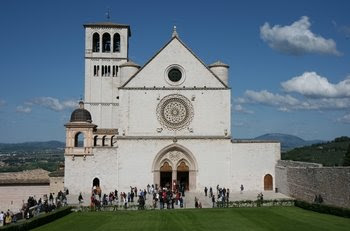


.jpg)


 Posts
Posts

